Back to services

Integrations and internal tools

ERP, WMS, CRM, and e-commerce integration

Every department has its own system, and people spend hours retyping data between them. We build an integration layer that moves data automatically and keeps it consistent, plus dashboards that show the whole company in one place. In one rollout this recovered about 4,800 work hours a month.

Schedule a call

When to get in touch

  • The same data is typed by hand into several systems.
  • Stock levels in the online store drift from the WMS.
  • A management report means collecting data from several places.
  • Copy errors cost you complaints and frustration.
  • A new system has to work alongside the old ones, not replace them.

Who it is for

Companies running several systems (ERP, WMS, CRM)E-commerce with a warehouseLogistics and distributionCompanies going digitalManagement needing one view of the data

What you get

Data flow map

We decide which system is the source of truth for which data and how it should flow between departments.

API integrations

ERP, WMS, CRM, e-commerce, payments, and carriers - both ways, real-time or scheduled.

ETL applications

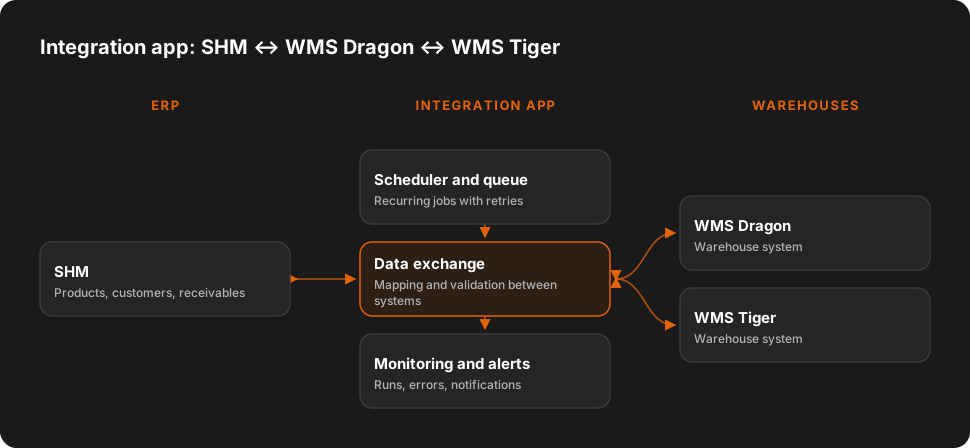
Recurring jobs with queues, retries, and monitoring, so no record gets lost along the way.

Operational dashboards

One view of orders, stock, and operations - instead of several tabs and spreadsheets.

Internal tools

Team panels that simplify a specific everyday task.

Alerts and monitoring

Notifications when an integration stops or data stops matching.

Case studies

Logistics and distribution

AlmaAlpinex - integration app

An app tying together the wholesaler's three systems - the SHM ERP and two warehouse systems, WMS Dragon and WMS Tiger - into one automated data flow. About 4,800 work hours recovered every month.

~4800 h recovered per month

Logistics and distribution

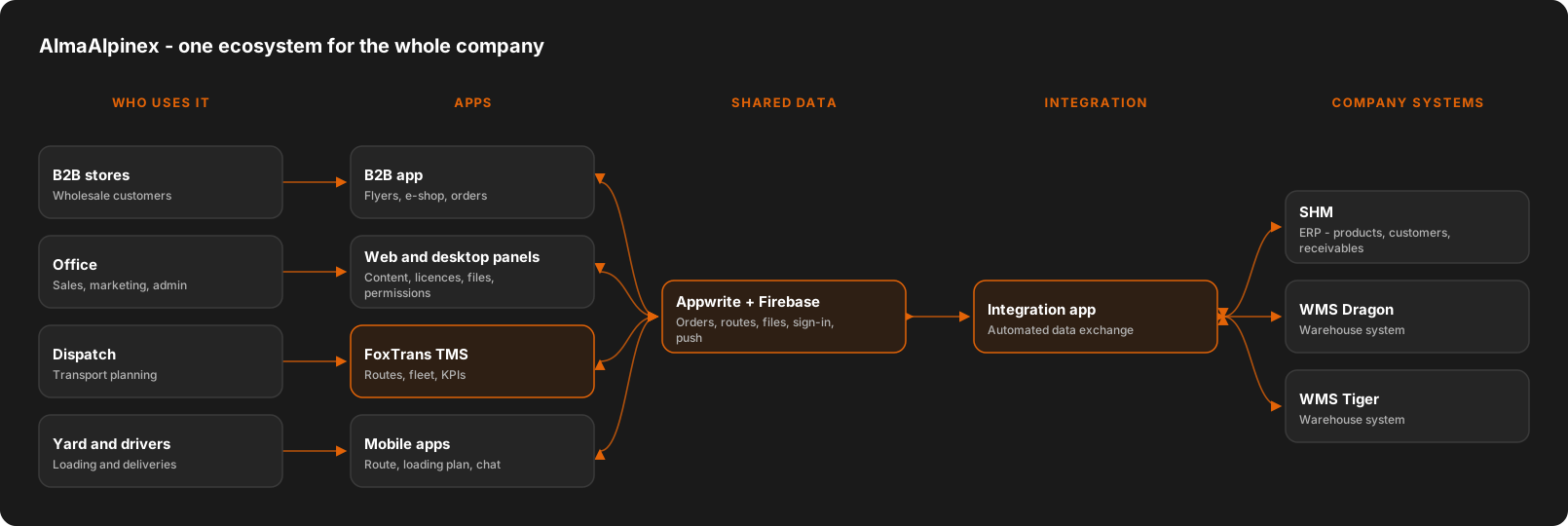
AlmaAlpinex - logistics ecosystem

Digital transformation of a 30M PLN wholesaler: a store app, an office panel, a TMS for dispatch, and apps for drivers and the yard - 80+ users on shared data.

30 mln PLN company revenue

B2B distribution / e-commerce

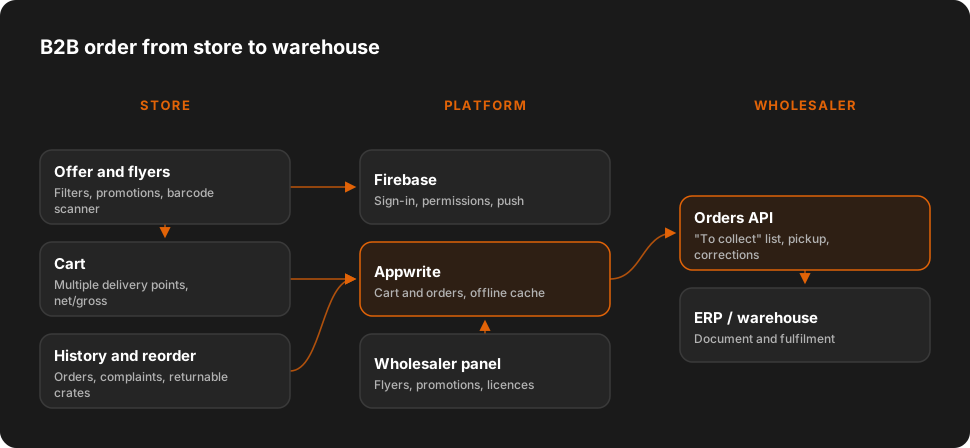
B2B Customer Portal

A wholesale ordering app for stores: catalogue with stock status, flyers, barcode scanner, a cart with multiple delivery points, and order history. Stores order on their own, 24/7.

24/7 self-service ordering

Phone sales and support

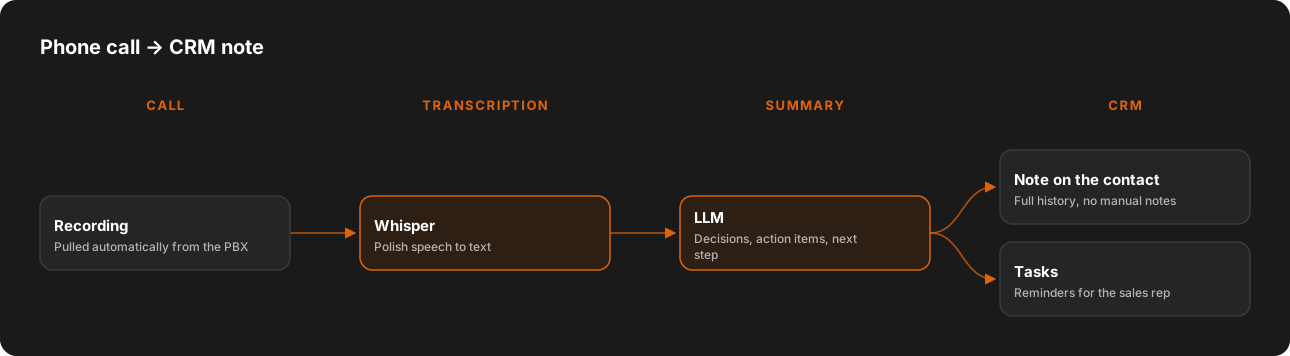
Phone call summaries

Every customer call is automatically transcribed and summarised - with decisions and action items - and the note lands in the CRM. Full contact history without manual notes.

Transport and logistics

FoxTrans - TMS

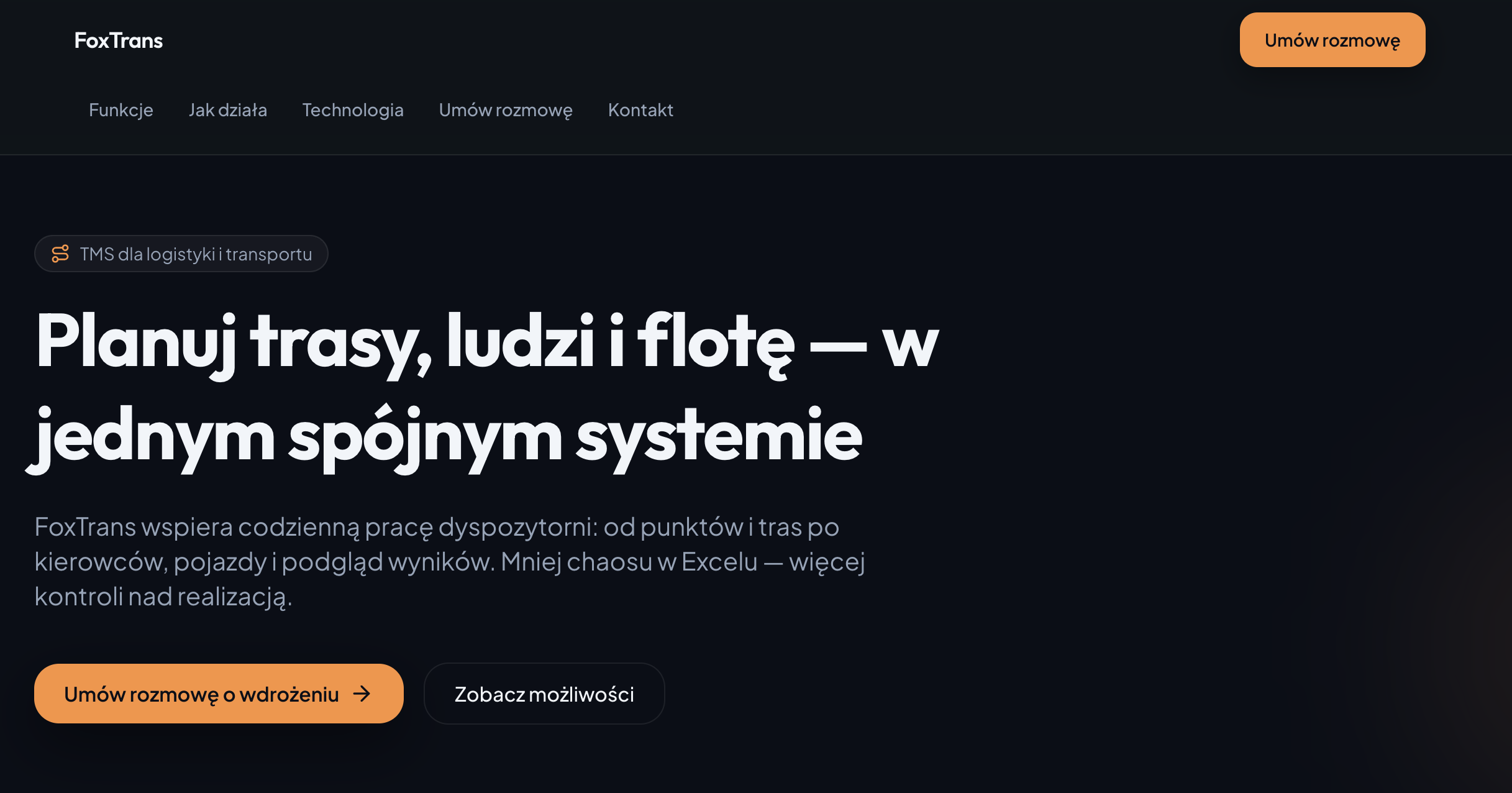
A transport management system for dispatch: route and stop planning, fleet, driver and yard apps, nightly route cost calculation, and savings KPIs.

4 apps: office, yard, drivers, scanner

IoT / micromobility / smart city

Helmet dispensers (IoT)

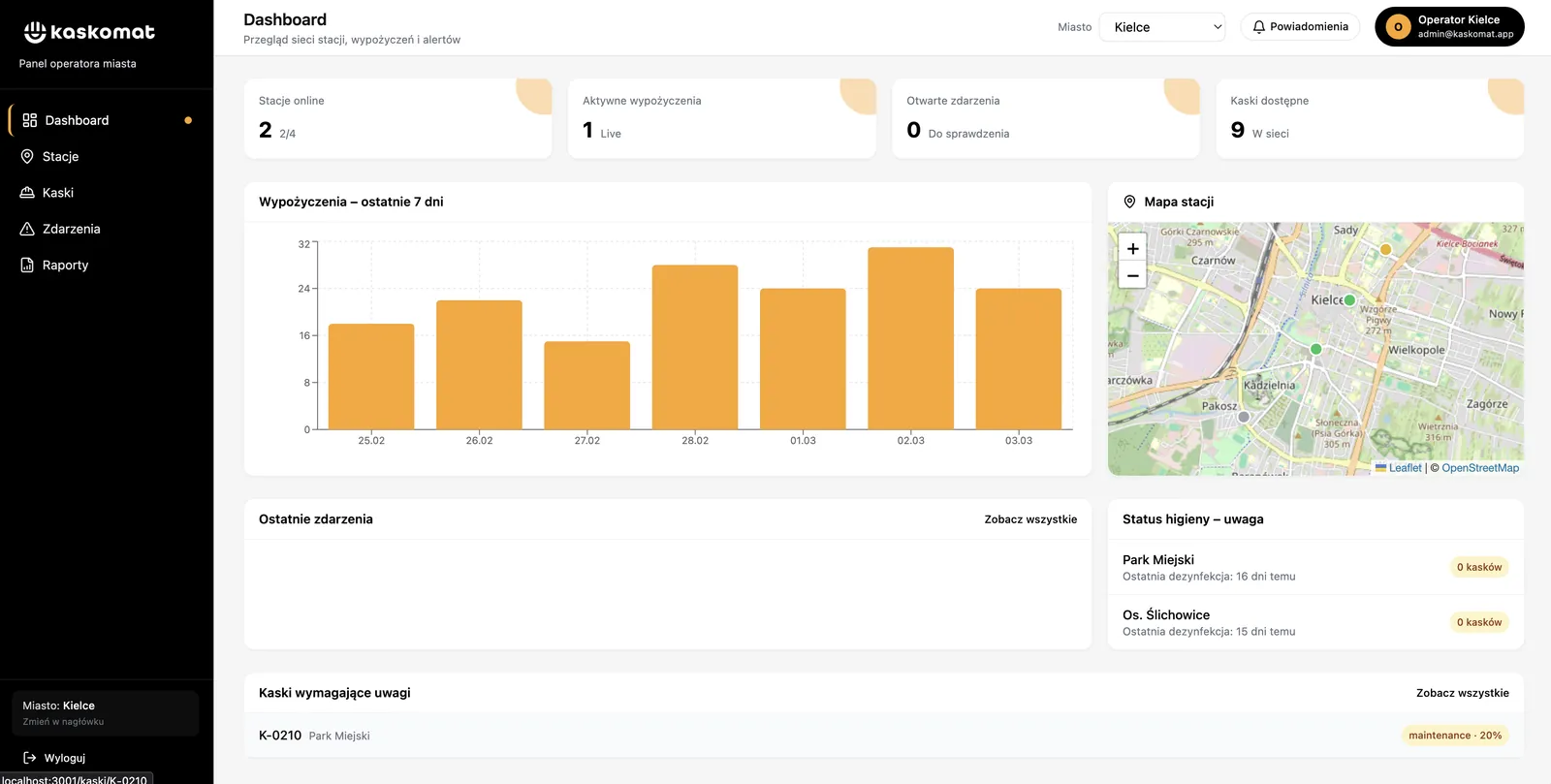
An ecosystem for a network of helmet kiosks: an app for parents and children with GPS monitoring and alerts, a panel for city operators, and a backend with an IoT gateway - with a full demo scenario from booking to disinfection.

5 roles: parent, child, tourist, operator, admin

How we work

From first conversation to working solution - fast and without unnecessary bureaucracy.

01

Conversation

We learn about your problem, goals, and business context.

02

Quick diagnosis

We assess the scope and propose a realistic action plan.

03

Solution proposal

We prepare a concrete offer with technology, timeline, and budget.

04

Delivery

We build, test, and launch - with ongoing communication at every stage.

Technologies

.NETHangfireREST APIPostgreSQLRedisDockerReactn8n

Questions and answers

Can a system without an API be integrated?

Often yes - via the database, file exports, or a custom connector. We assess feasibility at the start, before any commitments.

What happens when an integration fails?

We build integrations with job queues, retries, and monitoring. If something stops, you get an alert, and backlogged data is processed once the connection is back.

Do we have to replace our current systems?

No. Integration makes the most sense when your systems work and the team knows them - we connect them instead of replacing them.

How quickly do we see results?

The first automated data flow usually removes manual work right away. That is why we start with the flow that takes the most time.